This page is intended for UK patients who have been prescribed a Luforbec inhaler by their doctor, nurse or pharmacist. Not a patient? Click here
If you experience any side effects with Luforbec, please speak to your doctor, nurse or pharmacist or report directly via the national reporting system. More information about reporting side effects can be found at the end of this page.
Your Guide to Luforbec
(beclometasone/formoterol)
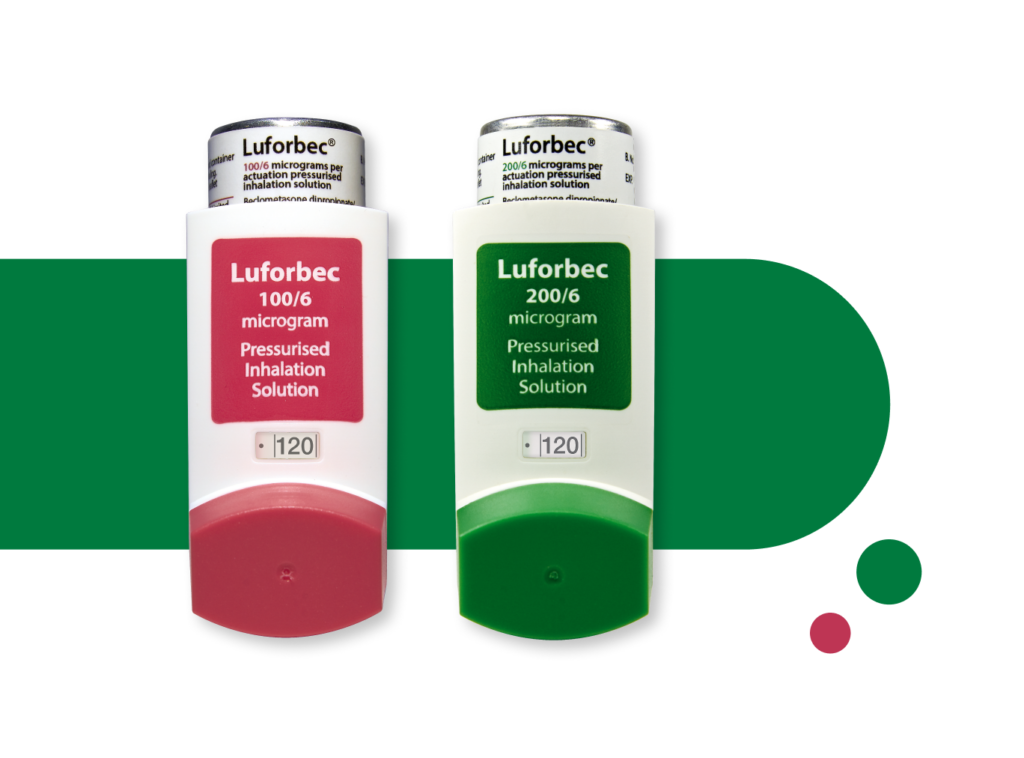
Your doctor, nurse or pharmacist has prescribed Luforbec pressurised metered dose inhaler (pMDI) to help manage your asthma or COPD.1,2
This page contains information and resources designed to support you with your treatment and is not a substitute for the Luforbec 100/6 or 200/6 Patient Information Leaflet that came with your medication. The Patient Information Leaflet can be found at the end of this page.
Remember to use your inhaler exactly as advised by your healthcare professional. If you have any questions or concerns about your medicine, please speak to your doctor, nurse or pharmacist.
About your inhaler
Luforbec is a pressurised metered dose inhaler (pMDI). Luforbec 100/6 helps manage asthma and chronic obstructive pulmonary disease (COPD), and Luforbec 200/6 helps manage asthma.1,2

Luforbec contains two active substances: beclometasone dipropionate and formoterol fumarate dihydrate. These are inhaled through your mouth and delivered directly into your lungs.1,2
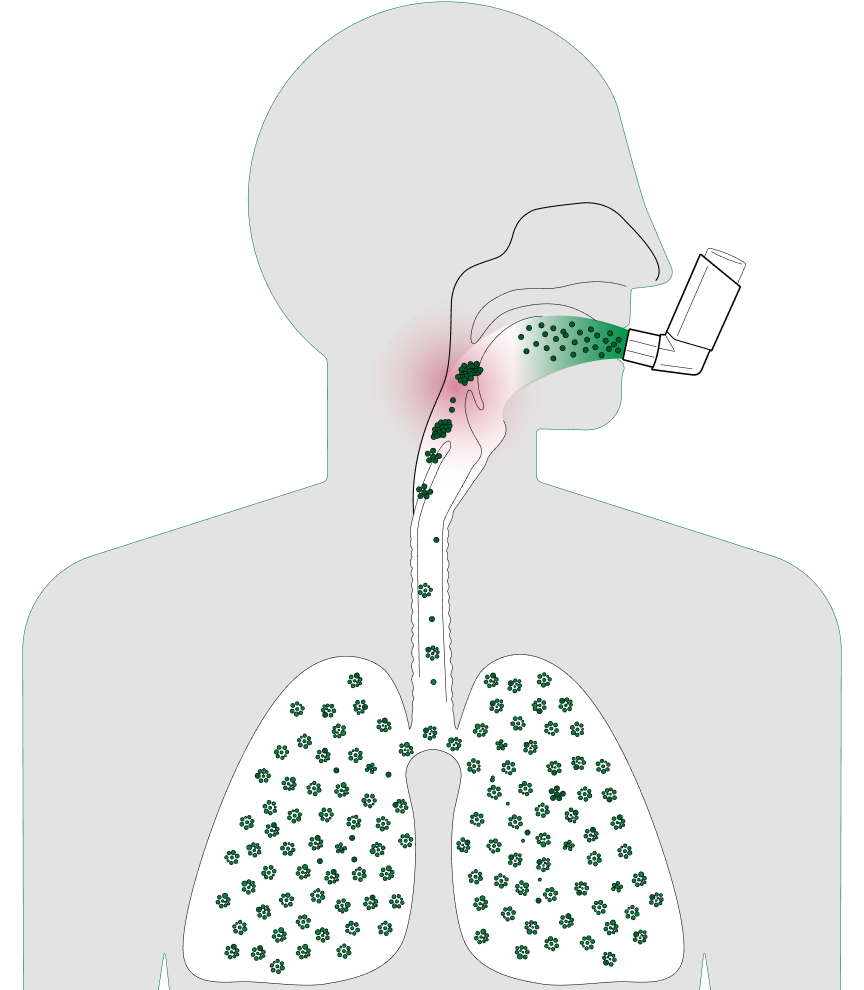
Beclometasone dipropionate
Belongs to a group of medicines called corticosteroids. It works as an anti-inflammatory agent, helping to reduce the swelling and irritation in your lungs.1,2
Formoterol fumarate dihydrate
Belongs to a group of medicines called long-acting bronchodilators. It helps you to breathe more easily by relaxing the muscles in the airways.1,2
The bronchodilating effect sets in rapidly, within 1–3 minutes after inhalation, and has a duration of 12 hours after a single dose.1,2
Together, they make breathing easier by providing relief from symptoms, such as shortness of breath, wheezing and cough. They also help prevent symptoms of asthma.1
The Luforbec pMDI is designed to ensure the active ingredients are delivered effectively and consistently into your lungs. With every use, a precise, measured dose of medicine will be released.1,2
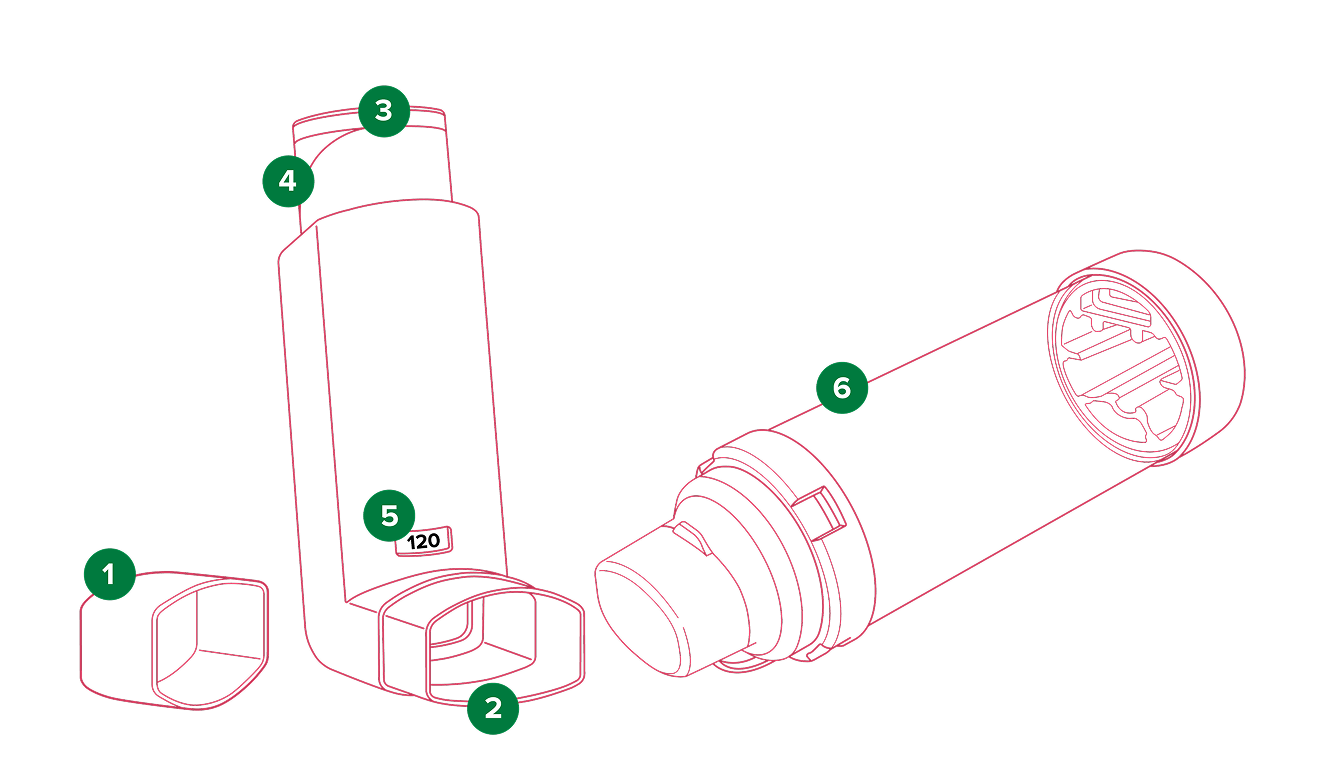
Your Luforbec inhaler features:
- A protective cap to keep the mouthpiece clean and protected when not in use.
- A mouthpiece where the medicine is released.
- A push button to release a measured dose from the canister. Each press delivers one dose when used correctly during inhalation.
- A canister containing your medicine.
- A dose indicator to show how many doses are left.
If you find it difficult to operate the inhaler while starting to breathe in, your healthcare professional may suggest that you use a spacer device (6).
Using your inhaler
Using your inhaler correctly is the most important step in managing your condition. Always use this medicine exactly as your doctor or pharmacist has told you.
Before using the inhaler for the first time, or if you have not used the inhaler for 14 days or more, you should test your inhaler to make sure that it is working properly.1,2
- Remove the protective cap from the mouthpiece.
- Hold your inhaler upright with the mouthpiece at the bottom.
- Direct the mouthpiece away from yourself.
- If you are using the inhaler for the first time, firmly depress the canister 3 times to release a puff every time you depress the canister.
- If you have not used the inhaler for 14 days or more, firmly depress the canister once to release one puff.
- Check the dose indicator. If you are testing your inhaler for the first time, the indicator should read 120.
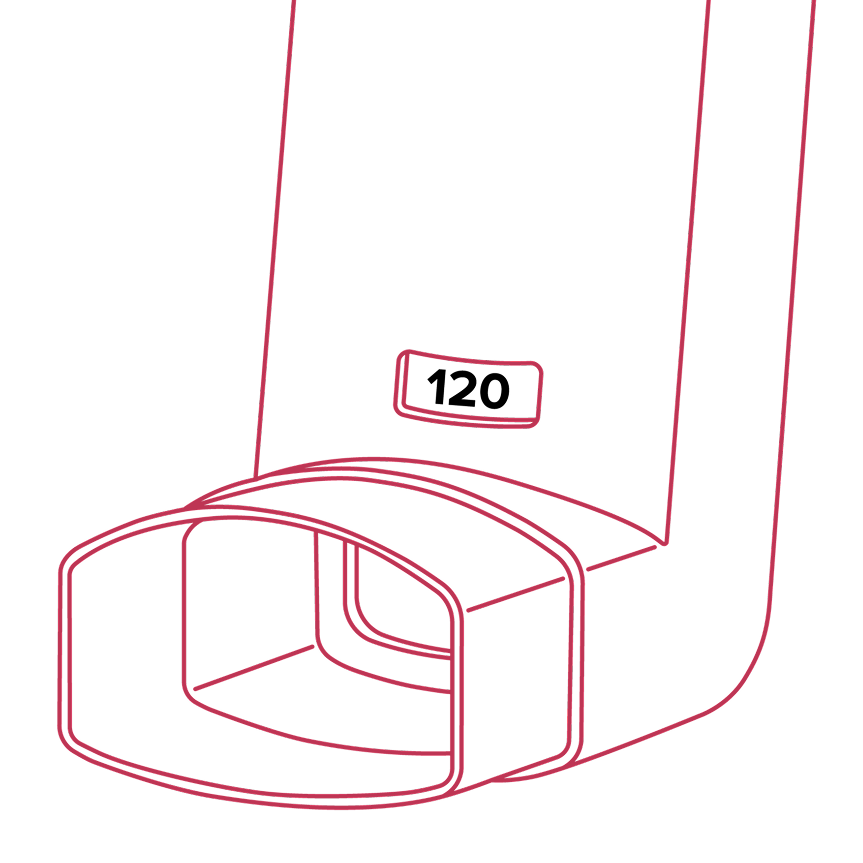
There is an indicator on the front of the inhaler, which tells you approximately how many puffs remain in the canister.1,2
Each time you press the canister, a puff of medicine is released. The dose indicator keeps track of every puff you take, and the number updates on the display after every 20 puffs.1,2
When 20 puffs remain, the display shows the number 20 on a half red and half white background, indicating that the canister is closer to its end of life.1,2
The dose indicator will stop moving when it reaches “0,” which is displayed on a red background after 120 puffs have been released. If the indicator shows “0,” no doses remain, and you must dispose of the inhaler and obtain a new one.1,2
Always use your Luforbec pMDI exactly as prescribed by your healthcare professional. Check with your doctor or pharmacist if you are not sure. The pharmacist’s label will tell you how many puffs to take and how often they must be taken. If you are unsure, please check with your doctor or pharmacist.
Luforbec 100/6 can be prescribed by your doctor in two different ways:
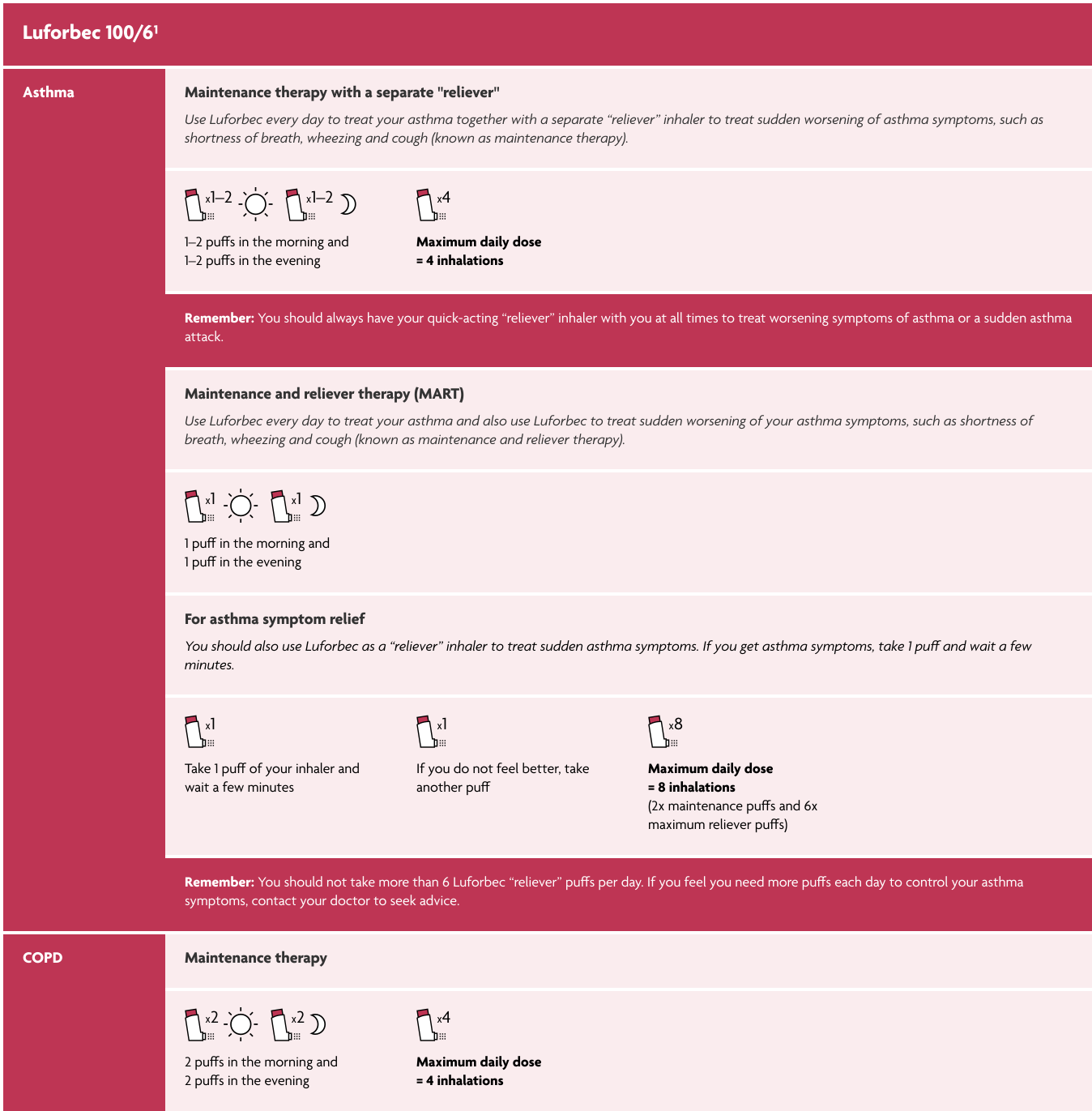
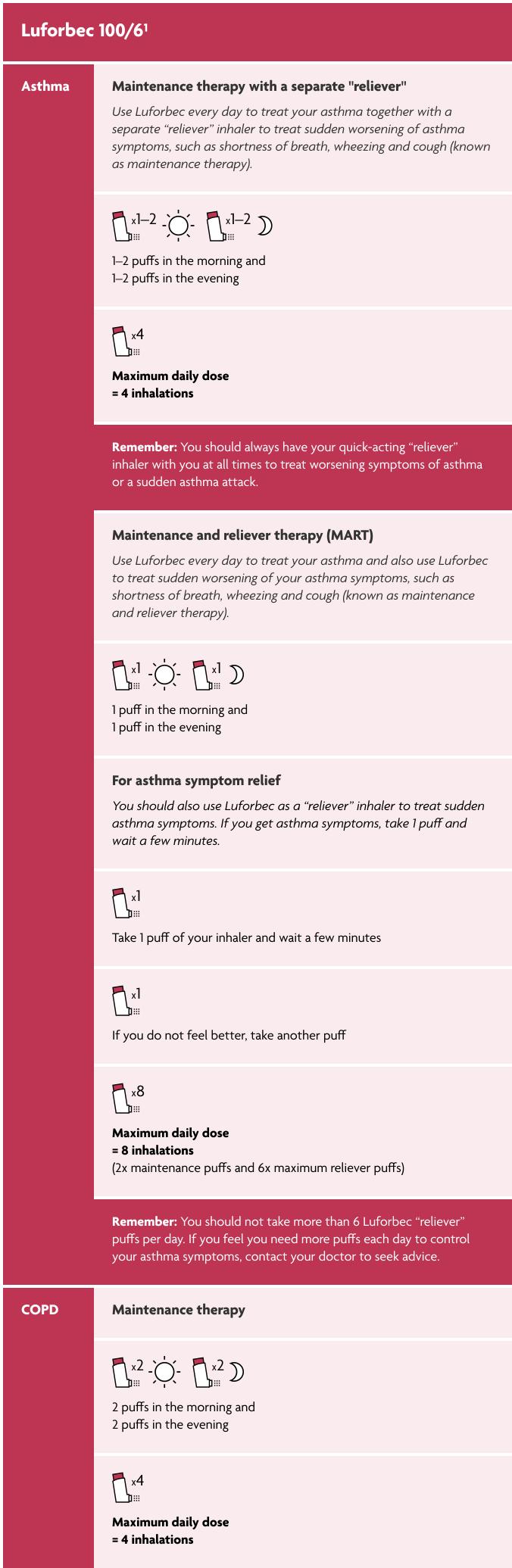

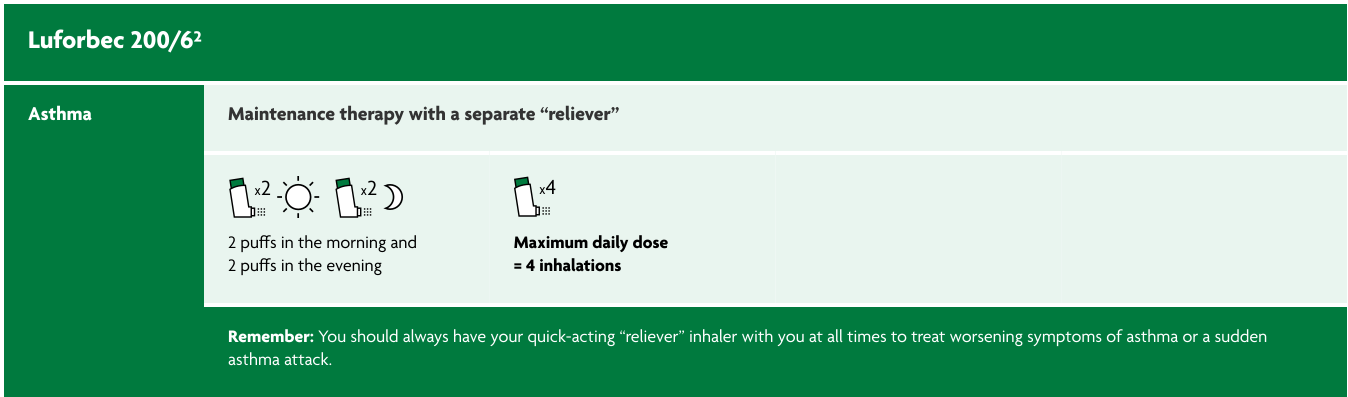
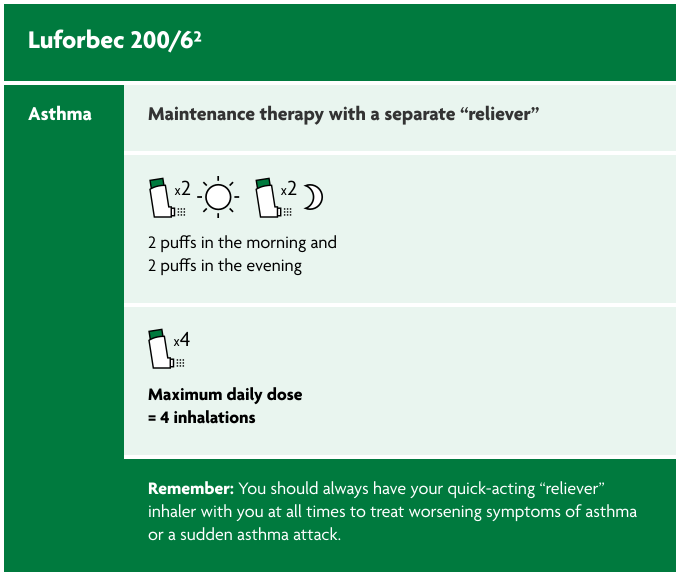
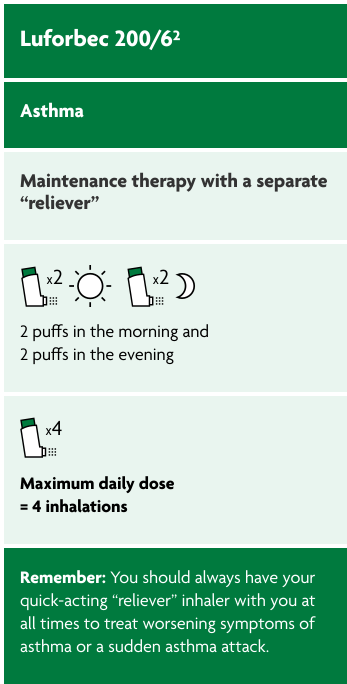
Luforbec is for inhalation use, and should be inhaled via your mouth into your lungs.1,2
Learn how to use your Luforbec inhaler with our quick video guides or by clicking the drop-down for step-by-step instructions.

Video

4m 25s
How to use your inhaler
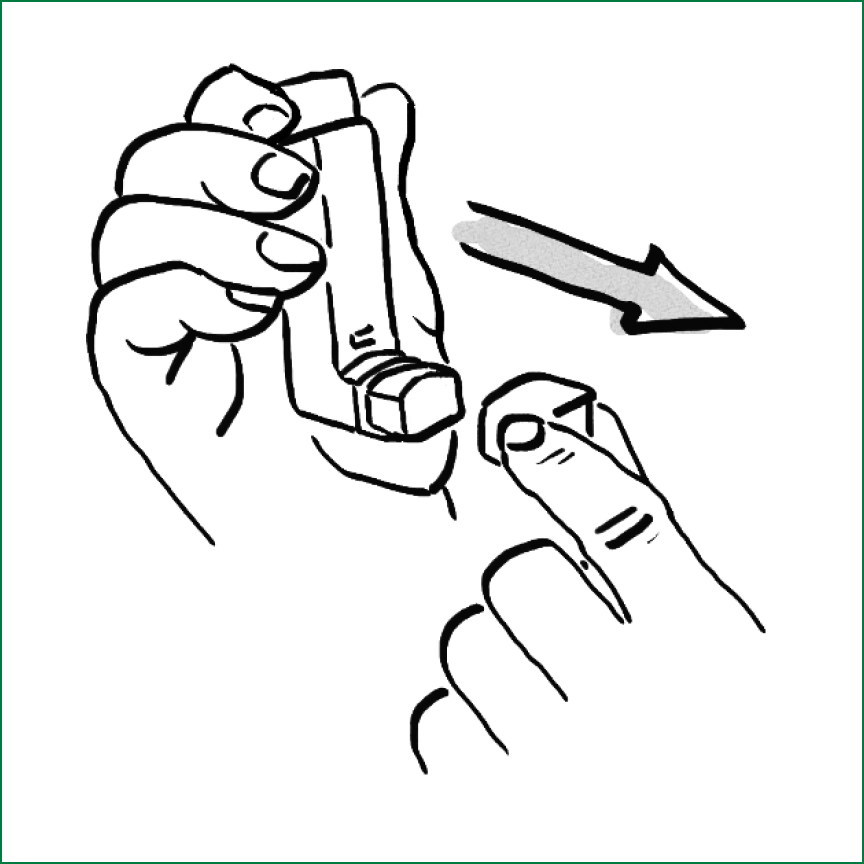
Step 1
Remove the protective cap from the mouthpiece and check that it is clean and free of dust, dirt, or any other foreign objects.

Step 2
Breathe out as slowly and deeply as possible.

Step 3
Hold the canister vertically with its body upwards and put your lips around the mouthpiece. Do not bite the mouthpiece.
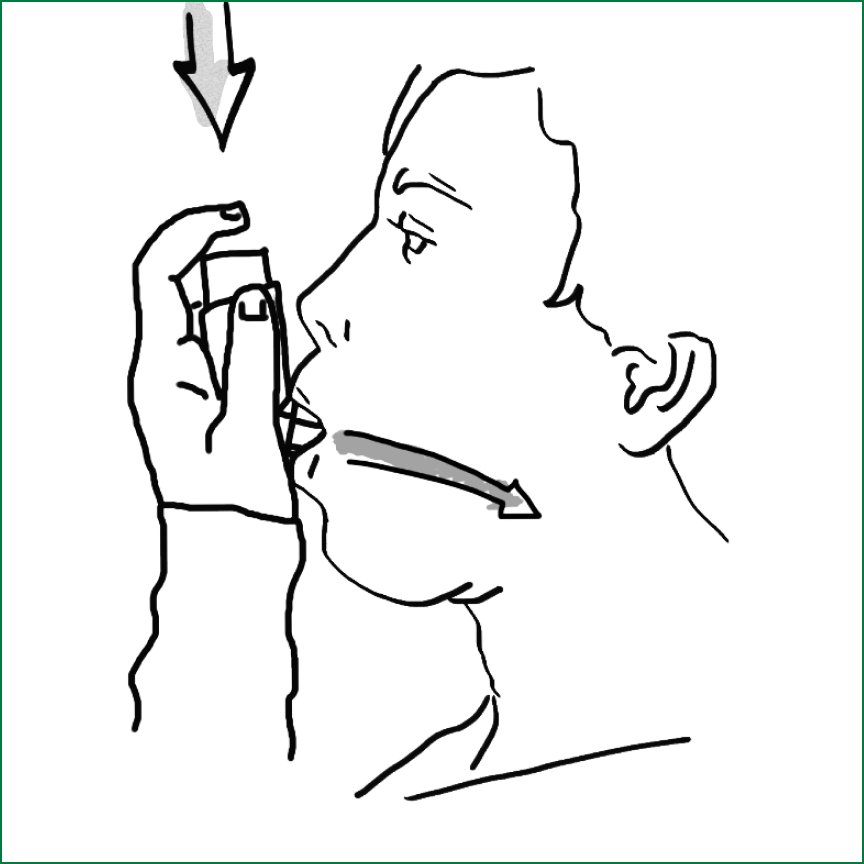
Step 4
Breathe in slowly and deeply through your mouth and, just after starting to breathe in, press down firmly on the top of the inhaler to release one puff.
If you have weak hands, it may be easier to hold the inhaler with both hands: hold the upper part of the inhaler with both index fingers and its lower part with both thumbs.

Step 5
Hold your breath for as long as possible and, finally, remove the inhaler from your mouth and breathe out slowly. Do not breathe into the inhaler.
It is important that you do not perform steps 2 to 5 too quickly.1,2
If you see ‘mist’ coming from the top of the inhaler or the sides of your mouth, this means that Luforbec will not be getting into your lungs as it should. Take another puff, following the instructions starting again from step 2.1,2
If you need to take another puff, keep the inhaler in the vertical position for about half a minute, then repeat steps 2 to 5.1,2
To lower the risk of a fungal infection in the mouth and throat, rinse your mouth, gargle with water or brush your teeth each time you use your inhaler. After use, close with the protective cap and check the dose indicator.1,2
If you find it difficult to operate the inhaler while starting to breathe in, you may use the AeroChamber Plus® spacer device.* Ask your doctor, pharmacist or nurse about this device.1,2
It is important that you read the package leaflet supplied with your AeroChamber Plus® spacer device and follow the instructions on how to use the AeroChamber Plus® spacer device and clean it carefully.1,2


Video
5m 27s
How to use your Luforbec inhaler with a spacer
A simple step-by-step video on how to use your Luforbec inhaler with a spacer.
Looking after your inhaler
Taking care of your inhaler is an important part of your treatment. It helps make sure your inhaler works properly when you need it.

Cleaning your inhaler1,2
You should clean your inhaler once a week. When cleaning, do not remove the canister from the actuator and do not use water or other liquids to clean your inhaler.
To clean your inhaler:
- Remove the protective cap from the mouthpiece by pulling it away from your inhaler.
- Wipe inside and outside of the mouthpiece and the actuator with a clean, dry cloth or tissue.
- Replace the mouthpiece cover.

Storing your inhaler1,2
Keep this medicine out of the sight and reach of children.
Do not use Luforbec beyond 3 months from the date you get the inhaler from your pharmacist, and never use it after the expiry date stated on the carton and label.
Do not store the inhaler above 25°C or freeze.
- If the inhaler has been exposed to severe cold, warm it with your hands for a few minutes before using. Never warm it by artificial means
- Warning: The canister contains a pressurised liquid. Do not expose the canister to temperatures higher than 50°C. Do not pierce the canister
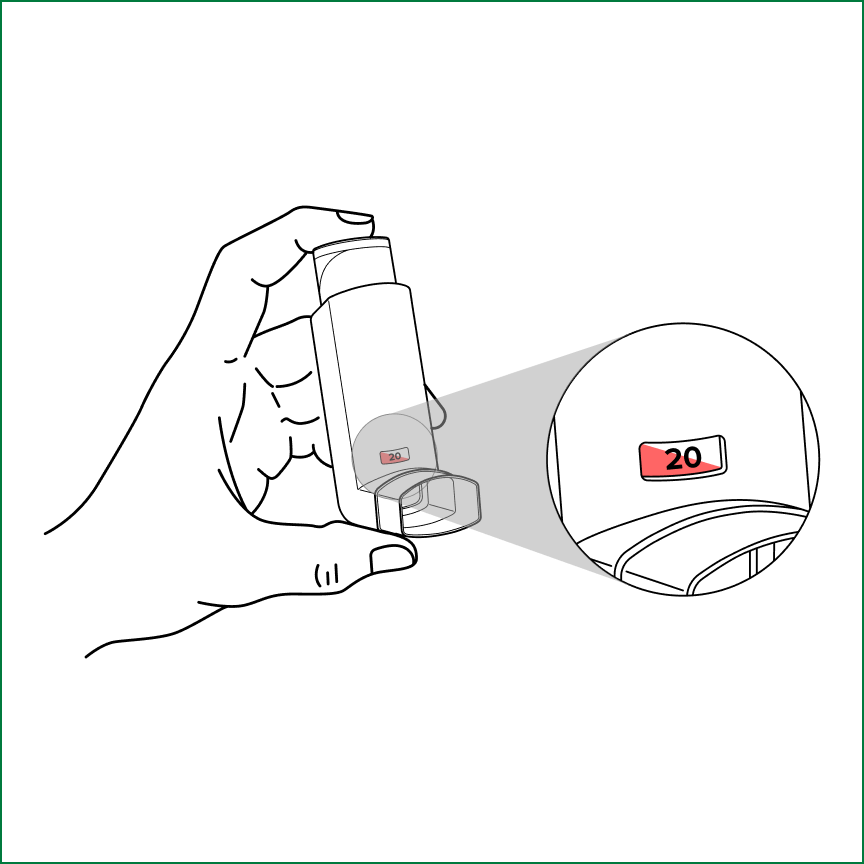
When to replace your inhaler1,2
You should get a replacement when the indicator shows the number 20 and the colour on the dose indicator changes from white to red.
Stop using the inhaler when the indicator shows 0, as any puffs left in the device may not be enough to give you a full dose.

Disposing of your inhaler1,2
Do not throw away any medicines via wastewater or household waste. Ask your pharmacist how to throw away medicines you no longer use. These measures will help to protect the environment.
How-to videos
Video
4m 25s
How to use your Luforbec inhaler
A simple step-by-step video on how to use your Luforbec inhaler.
Video
5m 27s
How to use your Luforbec inhaler with a spacer
A simple step-by-step video on how to use your Luforbec inhaler with a spacer.

Video
3m 34s
How to look after your Luforbec inhaler
This video shows you how to look after your inhaler, including tips on cleaning, storage, recognising when medication is running low, and how to dispose of it appropriately.
Patient Information Leaflets

Link
Luforbec 100/6 pMDI Patient Information Leaflet
The Patient Information Leaflet for your patients prescribed Luforbec 100/6 pMDI.

Link
Luforbec 200/6 pMDI Patient Information Leaflet
The Patient Information Leaflet for your patients prescribed Luforbec 200/6 pMDI.
Possible side effects
Like all medicines, this medicine can cause side effects, although not everybody gets them.
The most common side effects (affecting up to 1 in 10 people) associated with Luforbec are:1,2
- Fungal infections of the mouth and throat
- Headache
- Hoarseness
- Sore throat
- Pneumonia (in COPD patients)
There may be other side effects of taking Luforbec. Please refer to your Patient Information Leaflet for a full list of possible side effects.1,2
How should I report any side effects?
If you get any side effects, talk to your doctor, pharmacist or nurse. This includes any possible side effects not listed in the package leaflet. You can also report side effects directly via the Yellow Card Scheme at: www.mhra.gov.uk/yellowcard or search for MHRA Yellow Card in the Google Play or Apple App Store. By reporting side effects, you can help provide more information on the safety of this medicine.
*AeroChamber Plus® is a registered trademark of Trudell Medical UK Ltd.
Acronyms
COPD, chronic obstructive pulmonary disease; MART, maintenance and reliever therapy; pMDI, pressurised metered dose inhaler.
References
- Luforbec 100/6 pMDI Patient Information Leaflet. Lupin Healthcare UK Limited.
- Luforbec 200/6 pMDI Patient Information Leaflet. Lupin Healthcare UK Limited.
UK-LUF-2605-00006 | August 2026